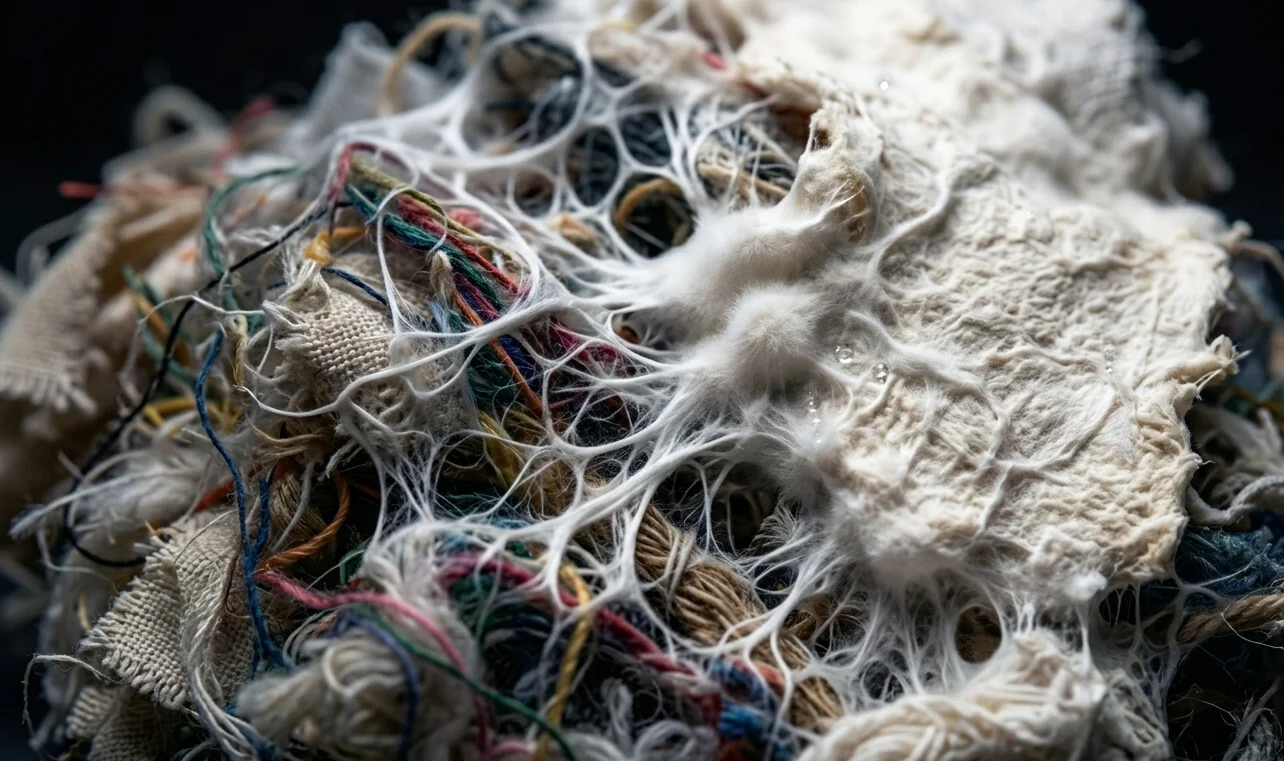
The Problem
Textile waste is a growing liability.
10%
of global carbon emissions come from textiles
1%
of textile waste is actually recycled globally
EPR
regulations tightening across Europe — fines incoming
50%
of industrial waste attributed to textile manufacturing
How It Works
Three steps. Full circle.
You Send Your Waste
Post-industrial offcuts, post-consumer returns — organic, synthetic, blended. We accept all fiber types including complex mixed streams.
We Remanufacture
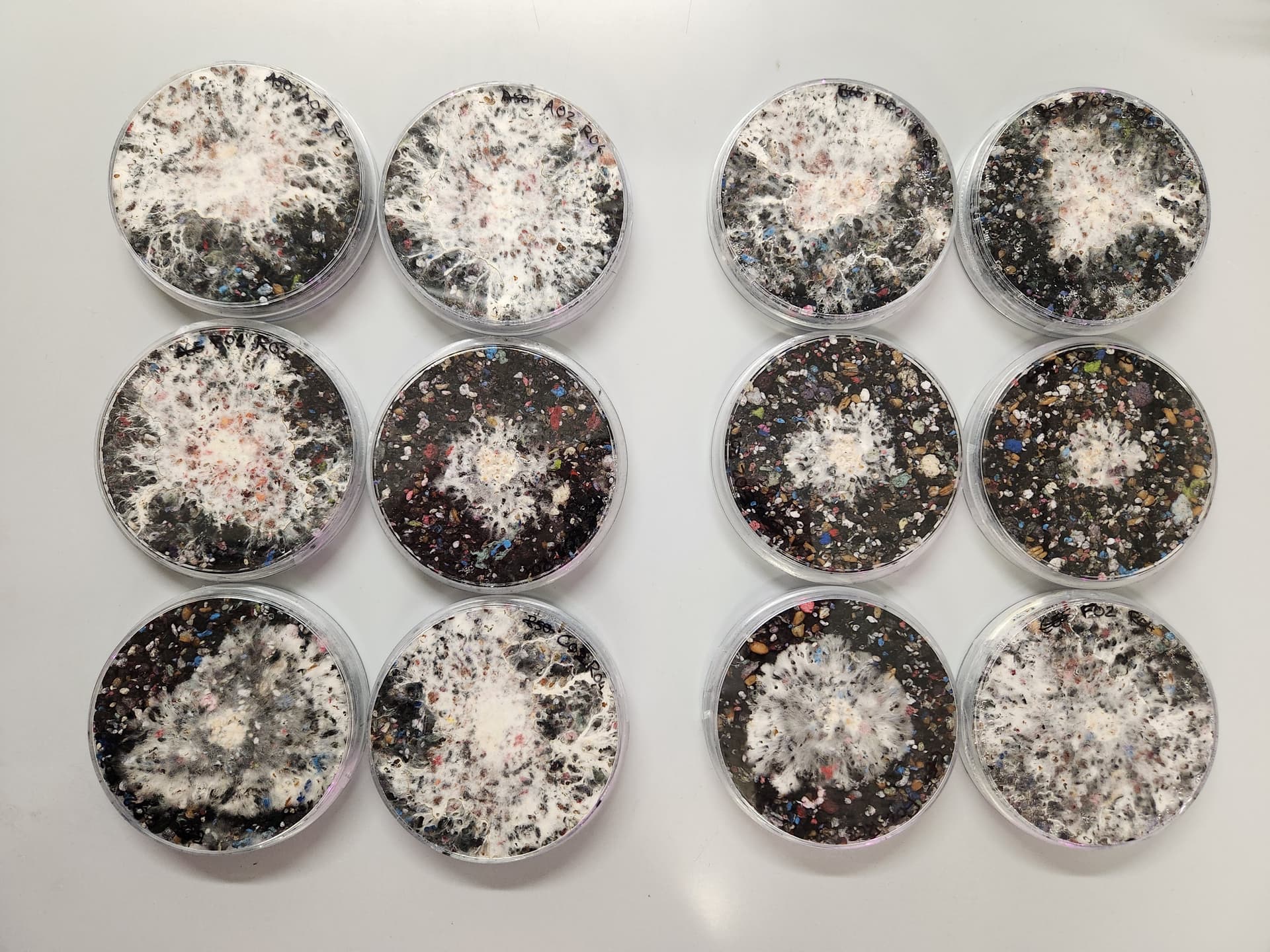
Textile substrates are inoculated with mycelium, grown into composite panels, and dehydrated. No synthetic binders. 10–14 day process.
You Get Value Back
Cost reduction on disposal. Full ESG documentation. Panels for your stores — each one traceable to your own waste stream.
What You Get
Turn liability into value.
Contact
Start your circular pilot.
Tell us about your waste stream — fiber type, volume, location — and we'll design a pilot that works for your brand.
Munich, Germany
FAQ
Things brands usually ask.
We accept all fiber types — organic (cotton, wool, linen), synthetic (polyester, nylon, acrylic), and blended fabrics. This includes complex mixed-fiber waste streams that conventional recycling cannot handle.
We work with brands at pilot scale to establish the right supply flow. Minimum volumes depend on your waste composition and frequency — we'll assess this together during our initial conversation.
From waste collection to finished panel, the mycelium remanufacturing process takes 10–14 days. Pilot setup typically takes 2–4 weeks from initial agreement.
Pricing is structured around your waste stream volume, fiber composition, and service level. Most brands see net cost savings versus conventional waste disposal from the pilot phase.
Get in touch via the form above or email us at info@mimbiosis.com. We'll schedule a short call to understand your waste stream and goals, then design a pilot that makes sense for your brand.