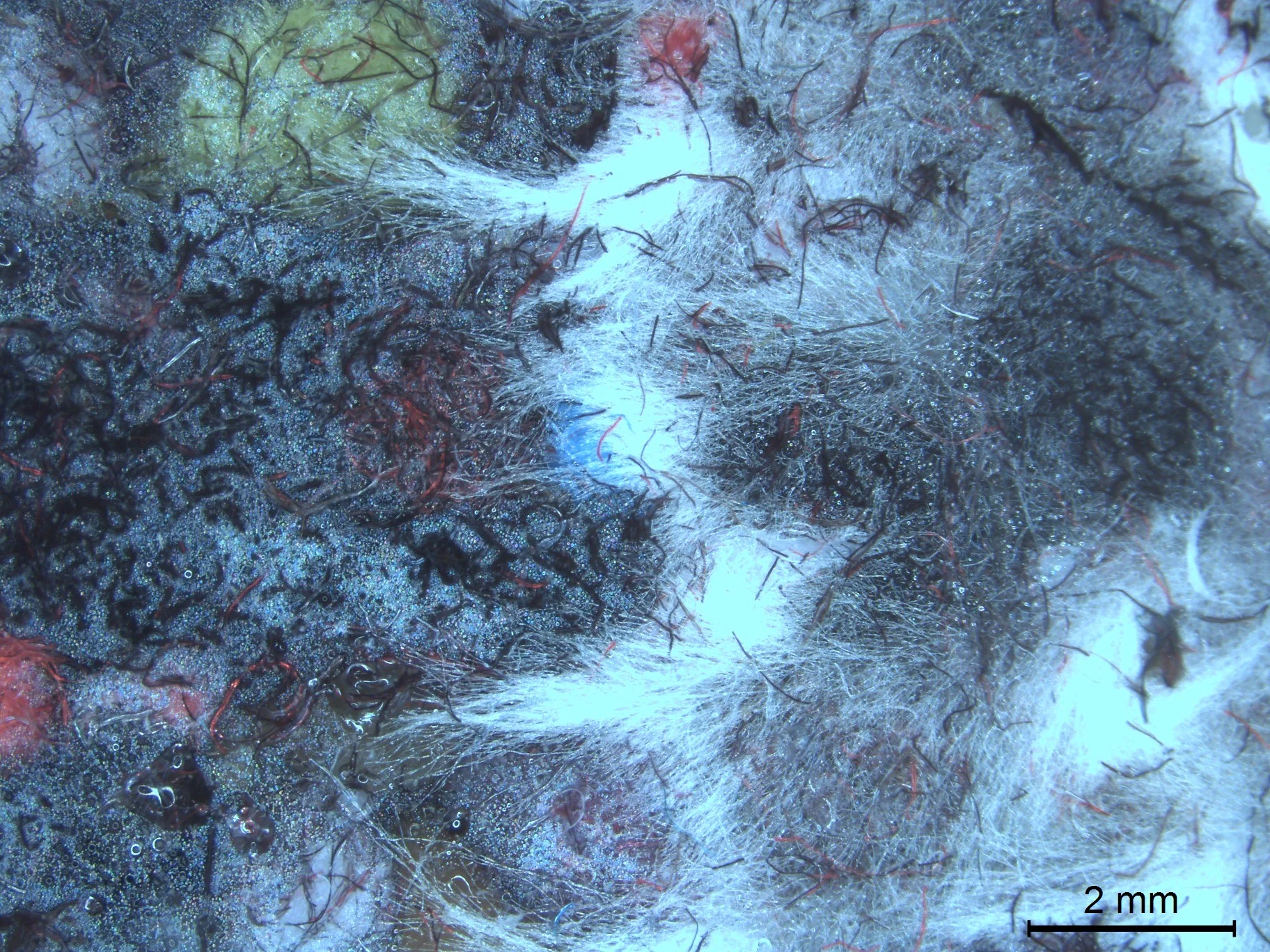
What is Mycelium?
Mycelium is the root system of fungi — an invisible network of threads that grows through soil and organic matter, binding everything together. It's how forests are built.
We use this natural process to bind textile waste. We introduce mycelium to shredded fabric, and it grows through the fibers, locking them into a solid structure.
The result is a rigid panel — held together entirely by biology. No glues, no resins, no synthetic binders.
0
synthetic binders — held together entirely by biological bonding
100%
waste input — no virgin materials in the substrate
2–3
months to fully biodegrade under composting conditions
The Process
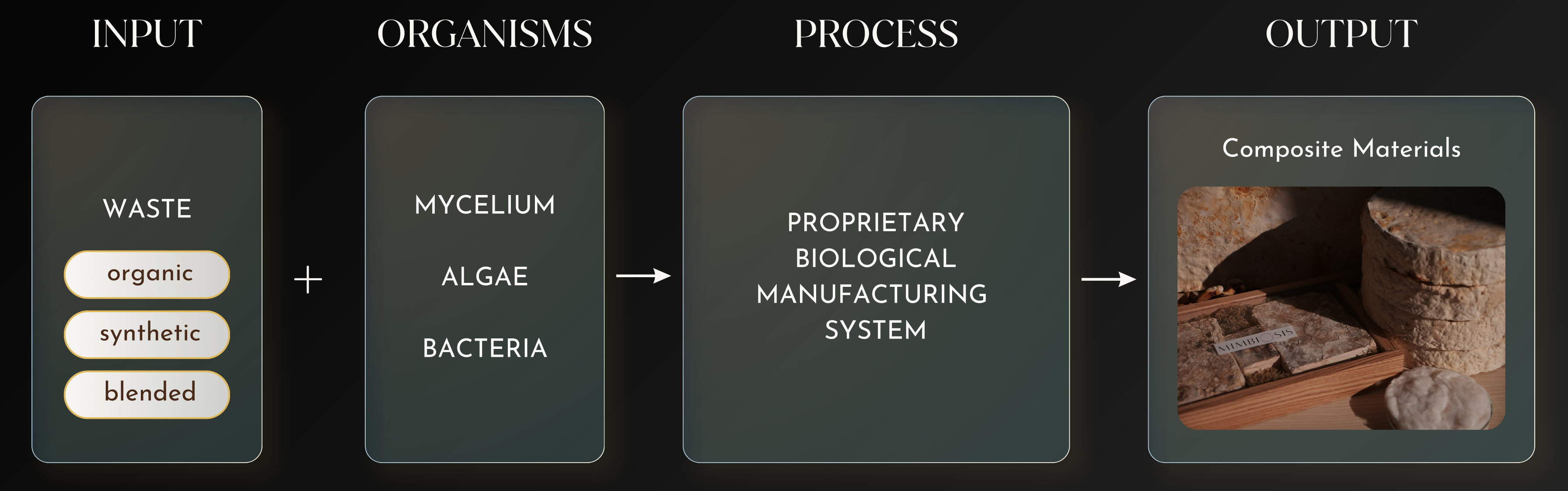
Waste Intake & Preparation
Incoming textile waste is sorted, cleaned, and prepared as a growth substrate. Fiber type and density are assessed to determine the optimal mycelium strain.
Days 1–2Mycelium Inoculation
The prepared substrate is inoculated with our selected mycelium culture and placed into custom moulds. Temperature, humidity, and CO₂ levels are controlled precisely.
Days 2–3Mycelium Growth & Binding
Over 7–10 days, mycelium threads colonise the substrate — growing through and around every fiber, binding the textile waste into a rigid composite structure.
Days 3–12Dehydration & Finishing
The grown panel is dehydrated to halt all biological activity — permanently locking the structure. Surface finishing is applied as specified.
Days 12–14The Full Circle
Your waste. Our process. Your space.
Waste Stream
Post-industrial offcuts, post-consumer returns. Synthetic, organic, blended — we take it all.
Remanufacturing
Inoculated, grown, moulded, dehydrated. Structural composite panels in 10–14 days. Zero synthetic binders.
Your Space
Acoustic, thermal, fire-retardant panels in your retail stores — traceable to your own waste stream.
See It In Person
The material speaks for itself.